


A General Guide to Male Fertility
Thank you for visiting with me today. Having and raising a child can be one of the most amazing experiences that any of us will ever have in life. Equally so, difficulties in conception can be one of the most frustrating experiences that many couples will go through. Infertility is quite common, and can affect up to 15% of heterosexual couples. As a urologist specially trained in male reproductive medicine and surgery, it is my goal to help guide you through this process and make sure that you have the highest chance possible of having a healthy baby. Below is a brief primer that I have written on male infertility. This is a very broad overview and there is a lot more detail available for those who seek it.
As a specialist in male infertility, I am a consultant for a wonderful company called Natalist (www.natalist.com), which specializes in male and female infertility products. I have written several educational articles for this website which you may find helpful. Furthermore, I have written a short e-book going into detail about common ways to improve male fertility potential. It is available for download on the Natalist website at https://natalist.com/products/guide-to-male-fertility. Normally it is $10.00 however my patients can obtain the book free of charge by using the code “DRSUNBOOK” at checkout. You may find the information contained within helpful as you proceed along your fertility journey. Please note that my recommendation for these educational resources is for the benefit of my patient’s education only – I have no direct financial relationship with the company and do not make any kind of commission on the sale of their products – though I do think that they offer some excellent products and educational resources!
The fertility journey can be at times a mixture of fun and frustrating, amazing and aggravating. It is my goal to help you along this path optimize your sperm and your overall health, and help make you the best father that you can be.
Dr. Andrew Y. Sun, MD
Urologist and Fellowship trained Male Reproductive Medicine and Surgery Specialist
Regardless of whether babies are on your brain right now or just a speck in the distant future, here is guidance and clarification on male fertility.
Infertility can affect up to 15% of heterosexual couples. The cause of infertility is shared pretty equally among men and women: roughly a third is attributed to women alone, a third is attributed to men alone, and the remaining third is attributed to a combination of the two.
15%
of heterosexual couples are affected by infertility.
65-80%
of male infertility cases are due to a problem in the testicles.
Signs and Symptoms of Male Infertility
Male infertility (often referred to as “male factor infertility”) is defined as any health issue in a man that lowers the chances of a female partner getting pregnant. In the cases where male-factors are to blame for difficulties conceiving, they generally fall into four groups:

Problems with sperm production
(The biggest list, including varicoceles, genetics, hormonal problems)

Problems with sperm delivery
(Ejaculatory duct obstruction)

PRoblems with sexual function
(Erectile and ejaculatory dysfunction)

Lifestyle and environmental factors
(Smoking, obesity, drugs, medications)
Taking a Step Back: Sperm 101
Conception is the magic that happens between the sperm and the egg; successful fertilization depends on happy and healthy (and fast!) sperm. So what makes sperm healthy? There are several aspects of sperm health:
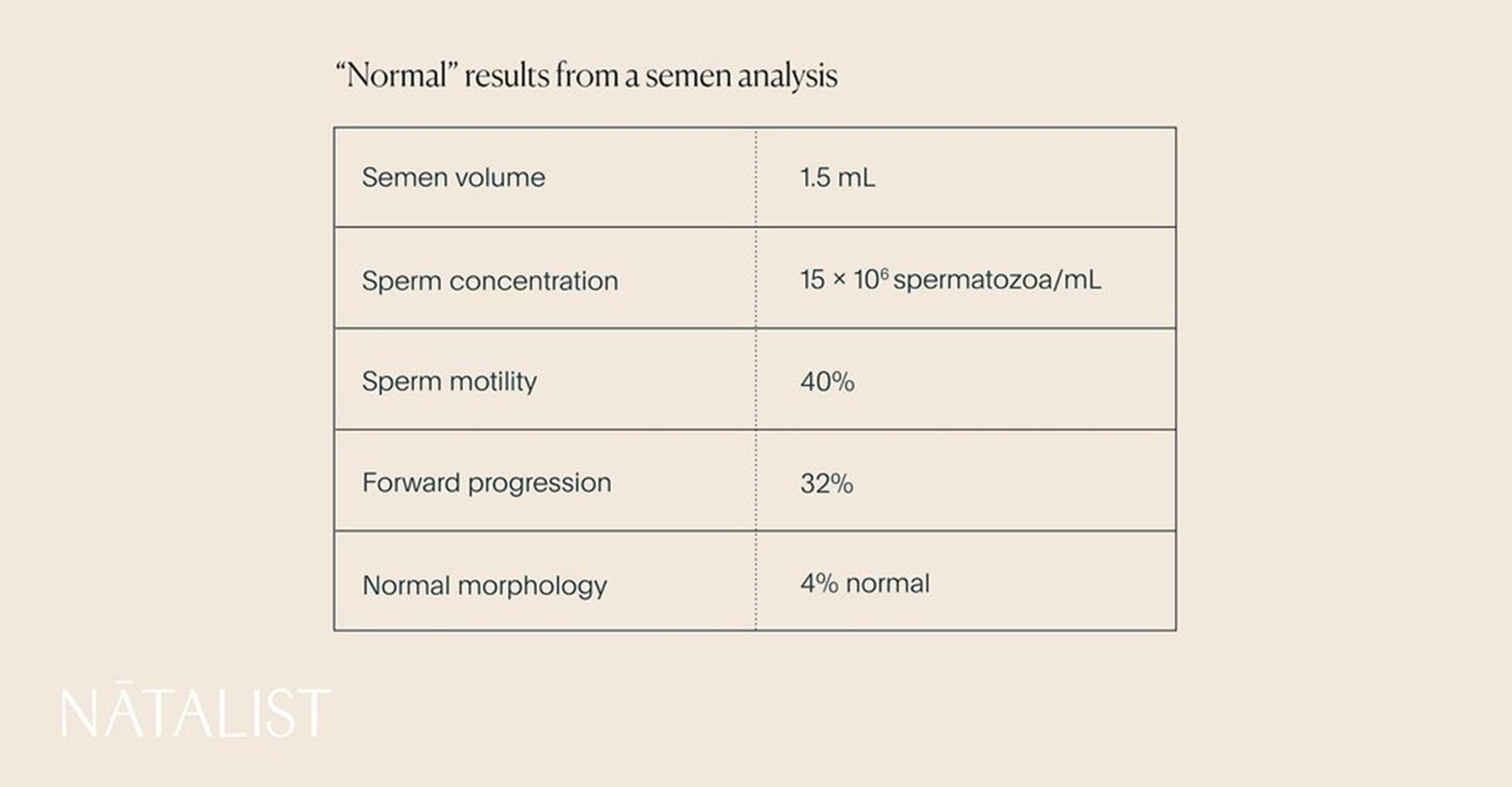
To evaluate sperm, a doctor will generally recommend a semen analysis, which looks at the measures above as well as a host of other factors including: pH (which should be between 7.2 and 8.0), sperm agglutination (the amount of sperm that stick to one another from a sample), total sperm count, viscosity (the rate at which semen liquefies), and more. These can all factor into your ability to conceive successfully.
Many doctors start off by ordering a semen analysis. To provide a sample, you’ll either ejaculate into a sterile container, or, you might be instructed to acquire a sample at home, using a special condom. Be aware: you’ll have to abstain from sex for two to five days before the sample is collected. This is to ensure there is enough semen to analyze.
Your doctor will also probably review past prescription or recreational drug use, including nicotine and alcohol. Past surgeries, infections, hormonal imbalances, and STDs can lower sperm quality and chances of conceiving, so will likely also be discussed.
Your physician may order some blood tests to check your hormone levels to make sure they are balanced. They might also suggest a scrotal or transrectal ultrasound. This admittedly sounds unpleasant, but it’s just a simple scan to rule out abnormalities in the testes or blockages in the ejaculatory duct that prevent healthy sperm production and transport.

Treatment Options for Male Infertility
The most common male infertility issue is due to a problem in the testicles (aka testes, or “balls”) leading to a defect in sperm production, which accounts for 65-80% of cases. In about 10% of those cases, the man is also facing a testosterone deficiency in addition to problems with sperm production. Another five percent of male infertility cases are due to a blockage in the pathway sperm use to leave the body during ejaculation. And a small number of cases (2-5%) are due to conditions affecting the pituitary gland or hypothalamus which essentially puts hormones out of whack. Finally, for about 20-30% of men with infertility, there are no identifiable causes (we call this “unexplained infertility”).